
I used to hate looking at our bank account, especially near the end of the month.
We are not usually buying anything expensive, we are not after luxury shopping or expensive things, and yet the money we were spending was a lot and not enough to last us through the month.
Every week, something kept appearing. School trip, car repairs, bigger grocery shopping or a new uniform for the kids.
We would pay bills and usual expenses, and have enough for weekly groceries and fuel, and that’s it. Anything extra had to be paid for with a credit card.
I remember sitting in the kitchen one evening, wondering again what had happened and where we were going wrong, and I realised we had to come up with a budgeting system.
Nothing fancy, no complicated spreadsheets.
Just a realistic monthly routine to help us stay organised and intentional with our money.
That’s when we started the monthly checklist, to keep us on track financially.
Why a Monthly Budget Routine Matters
Many people create a budget once and never look at it again. But the truth is that family finances change constantly.
Groceries go up, utility bills change, and kids grow up quickly and their needs too.
That’s why a successful family budget will keep you on track and on a routine.
It will help you:
- Stay organised
- Avoid missed bills
- Prepare for unexpected expenses
- Reduce overspending
- Track saving goals
- Feel less stress about money
Your Simple Monthly Budget Checklist
A step-by-step checklist our family uses to keep our budget running smoothly.
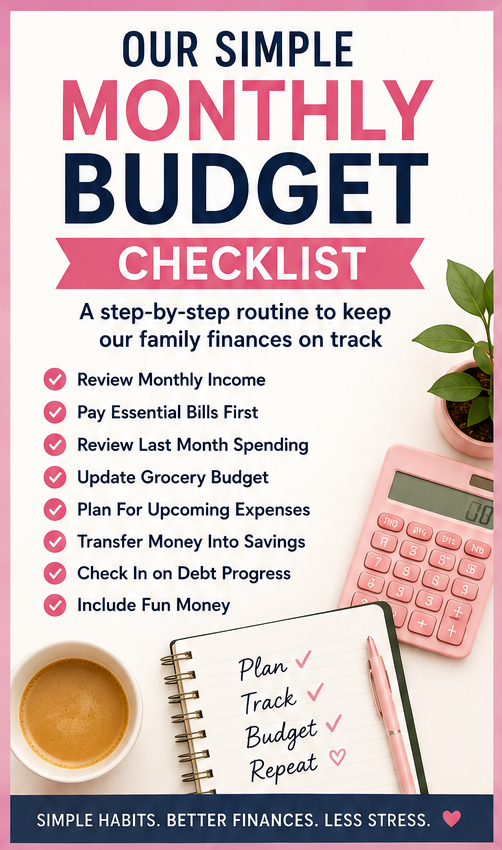
1. Review Your Monthly Income
Include all your monthly income:
- Paychecks
- Side Income
- Child Benefit
- Extra income
If your income changes every month, use the lowest expected income as your starting point. This will help you prevent overspending.
It was easy for us to overspend, especially during school breaks when the kids are at home and eating snacks all day like it’s their full-time job.
2. Pay Essential Bills First
Once you know your income, it’s time to focus on paying the important bills first.
- Rent or mortgage
- Electricity and gas
- transpartation
- insurances
- childcare
- debt payments
This step creates the foundation of your budget. If you have a bank account separate from your main one, put all the money aside and keep it for your regular expenses.
When you don’t see the money is easier to forget about them.
Write down all the due dates and how much is due to be paid. This simple step will take away a lot of pressure from you.
3. Review Last Month Spending
Take a quick look through:
- Your bank account
- Debit purchases
- Credit card statements
- Online shopping
- Grocery spending
This is one of the most important steps of your budgeting, although it can feel uncomfortable at first.
Look for patterns, one month we realised we had spent far more than expected on random takeaway.
Another month, we noticed a few subscriptions we had forgotten about.
These are the kind of hidden budget leaks that slowly drain family finances without notice.
4. Update Your Grocery Budget
Groceries are one of the hardest categories for a family to control.
Food prices change constantly. I used to walk into the shop without a plan and leave with an extraordinary bill, and nothing major in the trolley for meals.
Meal planning changed everything for us. Nothing major, just a simple meal plan and grocery list before shopping.
What to check before shopping?
- Check what we already have at home
- Plan a few easy dinners
- Make a shopping list
Easy Ways to Save on Groceries
- buy store brands
- plan cheaper meals weekly
- cook double portions
- reduce food waste
- avoid shopping hungry
5. Plan For Upcoming Expenses
One of the biggest budget spends is the things we forget and are not monthly.
Things like:
- Birthdays
- Christmas
- School supplies
- Car repairs/ Car insurances
- Back to school shopping
We don’t prepare for these expenses, and it feels like an emergency. Both of my children’s birthdays are near Christmas, and the best thing we did was to introduce sinking funds in our budgeting system.
What Is a Sinking Fund?
A sinking fund is simply setting aside a small amount of money each month for future expenses.
We save a little amount each month all year long, and instead of stressing about when these expenses happen, it’s easy because the money is already there waiting.
6. Transfer Money Into Savings
When we started our budgeting checklist, we were left with very little savings, simply because when we had no plan, we were taking money from the savings to cover expenses.
We then slowly started to rebuild our savings, and some months we could only save £20-£30. It didn’t feel very impressive at first, but building the habit mattered most.
Your savings checklist might iclude:
- Emergency fund
- Holiday savings
- Home maintenance
- Future goals
Setting up a direct debit helps you because you don’t have to rely on motivation every month.
7. Check In on Debt Progress
If you have any debt payments to pay off, include a quick debt review in your monthly routine
Things to look at:
- Balances
- Minimum payments
- Interest rates
- Payoff progress
Debt pay off can feel super slow at some moments, but tracking progress helps you to stay motivated.
Set up direct debit for easy transfers, and when possible, do overpay payments to pay it off quicker.
8. Include Fun Money in Your Budget
When we first started budgeting, we cut off every extra expense possible. Over time, it felt frustrating and miserable.
We realised that a budget has to be realistic for it to work in a long term. If every month we feel stressful and restricted it was not gonna last long.
We then included a small amount for:
- Pizza night
- Coffee runs
- Family movie nights
- Small treats/ out days
Creating a Family Budget You Can Actually Stick To
Real life is not perfectly predictable. If budgeting has felt overwhelming in the past, you are not alone.
Most families are juggling rising living costs, busy schedules, unexpected expenses and everyday life.
That’s why having a simple monthly budget checklist can make such a big difference. Remember some months are more different then others and they can be more expensive the others.
Make sure your budget works with your life — not against it. Small, consistent habits do add up over time.
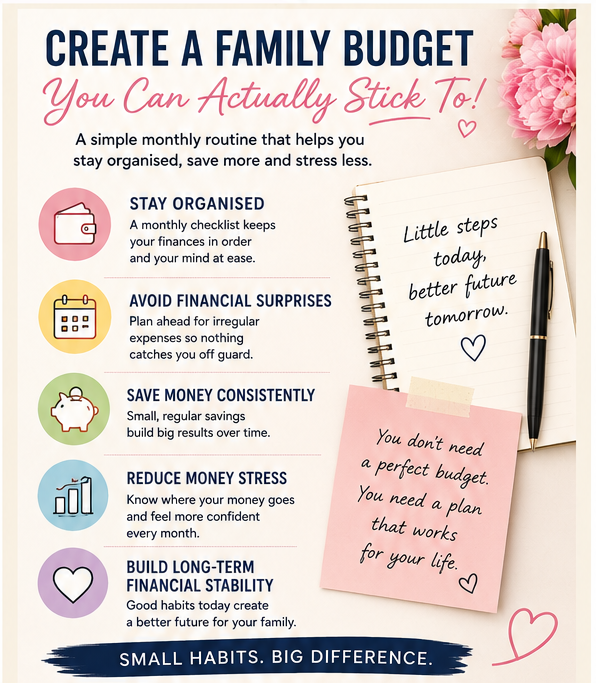
A simple monthly budget routine can help your family:
- Reduce money stress
- Save money consistently
- Feel more organises
- Avoid financial surprises
- Build long-term financial stability