
Many young adults leave school knowing how to solve complex maths problems, but have little understanding of budgeting, saving, or managing their own finances. Money is one of the most important life skills a child can learn, and is rarely taught in enough depth at school.
Studies have shown that money habits are formed by the age of seven. For most of us, our experience with handling money dates back to when we were little. We remember the times when our parents would give us money, and we had to decide whether to save it or spend it.
A couple of days ago, I was talking with some of my colleagues at work, and we had a conversation about money, teenage children, and savings. The thing that stood out for me was when one of my colleagues said, ”Oh, I wish we were taught some budgeting in school. I wish we knew more about real-life money, saving, budgeting, taxes, and how they all work. ”
We all agreed with her, and her words really made me think about how important this is. I’ve been thinking about it for the past few days, and I’ve realised that while schools teach many valuable subjects, they don’t teach enough about personal finance. That means we, as parents, are responsible for teaching our children about budgeting, taxes, saving, and making smart financial decisions from an early age.

Why Teach Children Good Money Habits?
Just as we teach our children to say “please” and “thank you,” we should also teach them healthy money habits. Learning how to save, spend wisely, and appreciate the value of money from an early age can set them up for a lifetime of financial confidence and responsibility.
Teaching them at a young age helps them understand the importance of managing money and the difference between needs and wants. Whilst buying the newest toy might seem cool, most of these will end up in the bin or on their way to charity. By saving up for bigger purchases, like a new gaming console or a phone, they can appreciate the effort it takes to achieve their goals instead of expecting instant rewards.
You don’t need to be a financial expert to teach your children about money. Children learn by watching the adults around them and your every day life examples give your child very valuable lessons, whether it’s a trip to the super market, saving pocket money, or talking about why you choose one purchase over another.
Here are fourteen simple money habits you can start teaching your children today.
Learn The Difference Between Needs and Wants
One of the first money lessons a child should learn is the difference between a need and a want. Needs are the things we must have to live, such as food, clothing, and a place to live. Wants are the things we would like to have but can live without, such as a fancy toy, a video game, or designer trainers.
Helping them identify the difference between needs and wants encourages them to think before they spend money on something.
Save Before You Spend
One very important financial habit for children to develop is learning to save part of their money before spending the rest. Whether it’s their pocket money, birthday money, or money they have earned through chores, encourage them to put some money aside first and then spend the remainder.
Set Saving Goals
Saving is much easier when there is a purpose behind it. Teach your child saving by encouraging them to choose something they really want to have, like an expensive game console, bicycle or something else that’s special for them and work out how much they need to save.
When there is a goal behind it, saving will be much easier, and will help them understand that saving for something valuable is more fun than just getting the latest toy or game that will probably end up being donated not long after.
Earn Money Through Responsibility
Children shouldn’t be paid for daily responsibilities, such as making their own bed or tidying their room, but offering them opportunities to earn extra money through additional tasks around the house is important and teaches them the lesson that money is earned through effort.
Age-appropriate jobs, such as washing the car or helping in the garden, help the children to connect work with income and build a strong work ethic.
Make Spending Decisions Carefully
Just like adults, children sometimes make impulsive decisions. Sometimes they will want something they have seen on TV or something their friend has, and they will want it too. But instead of impulsively buying it, teach your children to ask themselves a few questions first: Do I really need this? Will I still want it next week? Is there something I’d rather save for?
These questions will help them make decisions carefully and think about the long term value rather than buying something based on emotion or peer pressure.
Learn How to Budget
Budgeting is not as complicated as we often think. Show your child the basics and teach them to divide their money between three categories. Spend, Save and Give.
Every time they receive money, they should put a small amount into each category. As they get older, you can introduce more categories, but this simple way of budgeting will teach your child that money has limits and that it takes planning to reach their goals.
Understand That Money Doesn’t Grow on Trees
Teach your children that money is earned and that it is not unlimited. This will encourage them to become more thoughtful when spending.
It can be misleading for children when they see their parents just tap a cards or use a phone to pay in shops. Explain to them that the card you are using is linked to a bank account and that the balance decreases every time you tap it.
Explain where the money in the account comes from and that every purchase you make reduce the amount available in the account.
Compare Prices Before Buying
Teach your children that the first price they see is not always the best one. Often children don’t realise that the same item can cost different amounts depending on the shop. Some items in one shop can be more expensive than they are in another.
Teach them to compare prices and check online; sometimes it’s better to wait a few days for delivery and buy the item online if it’s cheaper.
Be Patient and Avoid Impulse Buying
It’s easy to buy something because it’s new or someone else has it. Encourage your child to wait a few days before making a decision about non-essential purchases. Most likely, they will realise they didn’t really want the item after all.
Learning to delay purchases helps children to develop self-control and prevents unnecessary spending, a habit that will benefit them throughout their lives, especially when they begin managing their own money as adults.
Understand The Importance of Giving
Money is not only for spending and saving. Teaching your children to give helps them develop empathy, kindness, and gratitude. Giving doesn’t have to involve large amounts of money. Even small acts of generosity can make a positive difference in others people’s lives.
Whether it’s donating to a charity, a local foodbank, or helping someone in need, children learn that money can also be used to make a positive impact on others.
Learn That Mistakes Are Part of Learning
Every child will make mistakes and occasionally make poor spending decisions. When they buy something and spend all their money on it, let them experience the consequences of their choices rather than immediately replacing what they’ve bought or giving them more money.
These small lessons help children become more thoughtful and responsible with money as they grow older. Sometimes, the best financial lessons come from making mistakes in a safe environment while they’re still young.
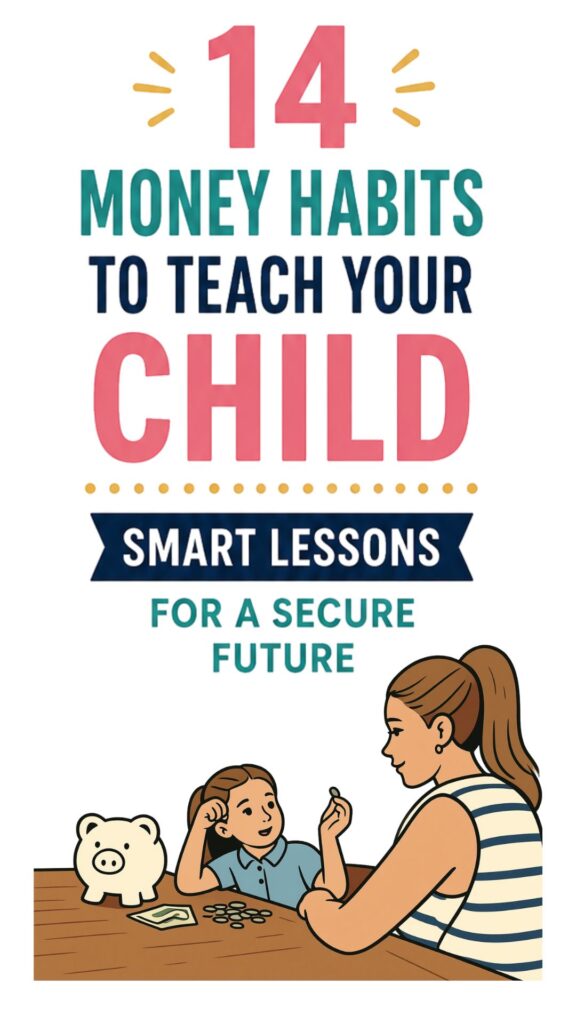
Start an Emergency Savings Fund
Setting aside a small amount from their pocket money helps children understand that saving is not just for things they want-it’s also for things they may need in the future.
For example, Imagine your child is saving money for a bicycle they want really badly. A week before they reach their goal, they break their headphones. Without an emergency fund, they might have to take money from their bicycle savings to replace them.
However, if they’ve been putting a little money aside in an emergency fund, they can buy a new pair of headphones without sacrificing their goal of buying the bicycle.
This teaches them the importance of being prepared for unexpected expenses and shows them that an emergency fund isn’t just for adults—it’s a valuable habit to develop from an early age.
Learn That You Can’t Afford Everything
One of the hardest and most valuable lessons children can learn is that it’s impossible to buy everything we want. No matter how much money we have, every financial decision involves making choices and deciding that matters most.
Helping your child understand that saying ”no” to smaller, less important purchases often means saying ”yes” to bigger goals, teaches self-discipline and encourages thoughtful spending.
Lead by Example
Children learn more from what they see than from what they are told. If they see you regularly budgeting, avoiding unnecessary debt, and making thoughtful decisions, they are much more likely to develop those habits.
Talk openly with them about money in age-appropriate ways, involve them where appropriate in every money decisions, and let them see that managing money is a normal part of adult life.
Final Thoughts
Teaching children about money doesn’t have to be complicated. The small lessons you teach today can shape the financial habits they carry into adulthood.
Start with one or two of these habits depending on your child’s age, keep the conversation going and lead by example. Over time, your child will build the confidence and skills they need to make smart financial decisions in their adult life.