
Teaching children about money is not just teaching them how to save, spend wisely and earn pocket money. It is also about helping them understand that money can be used to help other people in need and contribute to causes.
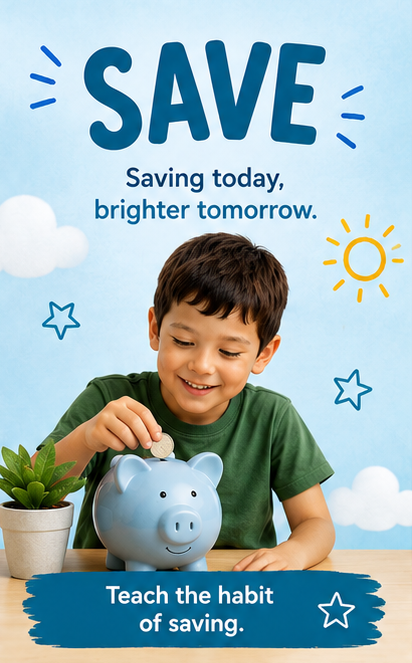
Learning from an early age about giving, sharing, and charity can help children develop generosity, empathy, gratitude, and responsibility. When children receive money, they can learn that they don’t have to spend it all. They can choose to spend some, save some and give some.
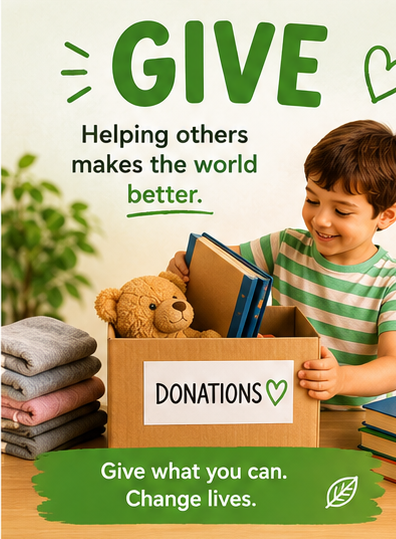
Giving doesn’t have to involve a large amount of money; something as simple as sharing a toy, donating a book or giving a small amount of change to a charity shop can introduce children to the idea of generosity. They can begin to see that money has different purposes and that one of those purposes can be helping someone.
Why Should Children Learn About Giving?
Giving does not always mean handing over money. Giving can take different forms; for example, giving your time, belongings, skills, attention, or support.
Children can learn generosity through everyday experiences. Helping someone carry something, sharing a toy with a friend, or spending time with someone upset are all examples of giving.
Children naturally notice when other people need help.
These everyday moments provide parents with the opportunity to teach children that being generous is not just about giving money, but also about caring for other people, noticing when someone needs help and thinking about what we can do to support them.
Learning about giving from an early age can help them develop empathy and compassion. When children understand that other people have different needs, they can begin to appreciate the importance of helping where they can.
For example, if a child decides to put £1 of their pocket money into a charity collection rather than spending it, it teaches them an important lesson: money can be used to support something that matters.
Explain What a Charity Does
Many children would have heard of the word ”charity”, but they may not know or understand what it means, and how charity organisations work.
Take some time to explain what charity organisations are and how they work to help people, animals, communities or the environment. Different charities have different purposes.
For example, one charity might help children who are seriously ill. Another might provide food for families experiencing financial difficulties. Others might support animals, protect wildlife, fund medical research, or help communities affected by disasters.
This is a useful opportunity to show your child that charitable giving is not just about handing over money. It is about supporting something that matters.
Let Your Child Choose a Cause
Children love having control over their own decisions. One of the best ways to encourage them to give is to let them pick the charity organisation themselves.
Ask your child what they care about. If they love animals, they may want to support an animal organisation, or if they love playing football, they might want to help children have access to sports. If they care about the environment, they may choose a cause that protects nature.
You can talk about different causes together and allow them to choose one or two that they feel they would like to support.
Making the decision themselves can make it more personal, and it will also teach them a very important financial lesson: money reflects priorities.
Let Your Child Choose Their Giving Amount
Children don’t need to give large amounts of money. The aim is to help them develop the habit of thinking about others while making their own financial decisions.
You can create a simple giving jar where your child puts aside small amount of money when they receive cash. The amount doesn’t have to be fixed. Even a small amount can contribute to something that matters.
This allows them to practice making their own financial choices. They will understand that they don’t have to spend everything they receive.
Make the Giving Jar Visible
Keeping the giving jar visible somewhere your child can see it helps them keep the routine and put money in the giving jar.
Whenever they receive cash, remind them that they have the choice to put some money in the giving jar. Watching the giving jar fill up can also help children see how small contributions add up over time.
Once the giving jar is full, sit down and decide which charity you will support. If your child has picked more than one, you could decide together how to split the money.
The goal is not about the quantity; it is not important how much exactly you give; it matters that you are helping them develop the habit of thinking about others and making thoughtful choices with their money.
Final Thoughts
Teaching children about giving is about much more than encouraging them to donate money. It’s about helping them understand generosity, empathy and the choices that come with managing money.
The key lessons are:
Giving is not just about money- children can give their time, belongings, attention, skills and support.
Money has different purposes- children can spend, save and give.
Let children make choices- allow them to choose a cause and decide how much to give.
Make giving a habit- a simple giving jar can help children regularly think about others.
Focus on the lesson, not the amount- the goal is not to teach children how much they should give; it is about helping them become thoughtful and responsible with money.
Pingback: The 50/30/20 Budget Rule Explained: A Simple Guide to Managing Your Money - Guide Your Budget