
Do you ever feel like you never know where your money has gone?
You get paid, pay your bills, spend here and there, and at the end of the month, you realise you have saved nothing.
If this sounds like you, welcome- you are not alone.
The good news is that I have created 30 Days Money Reset Challenge for you.
Over the next 30 days, we’ll review your spending habits, find the leaks that are draining your budget, cut unnecessary spending, build your savings, and help you work towards becoming debt-free.
I will give you one task per day. Some days the task will be easy to complete, and other days you will find it challenging.
You don’t need to be perfect. You don’t need to save a huge amount of money. And you don’t need to have everything figured out before you start.
All you need is 30 days, a willingness to be honest about your money, and a commitment to yourself.
Week 1: Find the leaks!
Day 1: Check your bank balance and write down your total savings and debts.
Include your essential spending such as: rent or mortgage, transportation, gas and electricity bill, insurance, etc.
Write down your debts, including the interest you pay.
Day 2: Check your last 30 days of bank transactions.
Review your bank transactions for the last 30 days and confirm that everything you have paid for is accurate and you recognise every transaction.
Day 3: Find every subscription and cancel anything you don’t use.
Most people have at least one subscription they are paying for, that they have forgotten about. That’s why it’s good, form time to time to check your subscriptions and cancel anything you are not using.
Day 4: Check your phone, broadband, insurance, gas and electric, etc for cheaper deals.
Often we can find better deals elsewhere and changing providers it may look stressful but it doesn’t have to be. Most of the time, you just have to make the call, and they will do everything else for you.
Day 5: No-spend day.
Today will be your first no-spend day.
It’s good to have days when you don’t spend any money. Think of it as a day when you avoid spending money on anything that is not essential.
Day 6: Check your cupboards and freezer. Make meals using only the ingredients you have at home.
People sometimes don’t realise how many meals they can make with the food they already have at home.
Day 7: Add up everything you have spent this week.
This is the end of your week one of your challenge. Well done for making it this far and don’t judge yourself if the outcome is not the one you expected.
Take a moment to look at what you’ve learned so far, celebrate the small wins and use what you’ve discovered to make week two even better.
Week 2- Stop unnecessary spending!
Day 8: Start the 24-hour rule.
Today we are going to tackle impulsive buying.
Before you spend money on something you don’t necessarily need, take some time to think. Give yourself 24 hours to decide if you really need it.
Don’t buy it straight away, ask yourself these simple questions:
- Do I really need this?
- Am I actually going to sue it?
- How long will it last?
Sometimes something that feels important to buy today may not feel as important tomorrow.
Day 9: No takeaway food or delivery today.
Easier said than done! Refer to day 6, check your cupboards and fridge and cook a meal at home.
Day 10: Make your own coffee/drinks at home.
I know that grabbing a hot drink in the morning from the coffee shop on your way to your work can be very tempting.
But making your coffee or favourite drink at home can save you money, save you time, and help you start your morning feeling more organised and productive.
Day 11: Sell 3 things you don’t use.
Today is a great day to clear out some things from your home and make some extra money.
Find three things you no longer use or need and list them for sale.
Once they sell put the money into your bank account or savings.
Day 12: Have another no-spend day.
Day 13: Compare supermarket prices and try cheaper alternatives.
There must be at least a few cheaper supermarkets in the area where you live, and if you are not shopping there already, it might be worth giving them a try.
You don’t have to change everything at once, start with a few of your regular purchases and see how much of a difference it makes.
Day 14: Calculate how much you saved during week 2.
Well done for getting through week 2.
Give yourself a little celebration treat. Buy yourself a nice beverage or some of your favourite treats. Depending on what you like, celebrate with something small that fits within your budget.
Week 3- Build your savings!
Day 15: Open a separate saving account if you don’t have one already.
Day 16: Transfer a small amount into your saving account.
Even if it’s just £10 still counts.
Day 17: Set up standing order for payday.
One of the easiest ways to save money is by following the rule: pay yourself first.
After you calculate how much your essential monthly expenses are, such as rent or mortgage, bills, food and transportation, decide how much you are comfortable putting into your savings and set up your standing order.
Don’t wait until the end of the month to see what’s left. Think of your savings as an important payment- the one you make to yourself.
Day 18: Look at your biggest monthly expense and find a way to reduce it.
For example, one of our biggest monthly expense is food shopping.
I am always looking for ways to save. My latest find is buying in bulk where possible.
Find yours and try to find a way to reduce it.
Day 19: Have a no-spend day again.
Day 20: Free entertainment.
Plan something to do today that will cost you absolutely nothing.
It can be going for a walk and taking a drink you made at home, having a picnic in the park, or visiting a free local attraction.
Whatever you decide to do, the idea is to remind yourself that having a good day doesn’t have to involve spending money.
Day 21: Check your progress. How much have you saved or avoided spending?
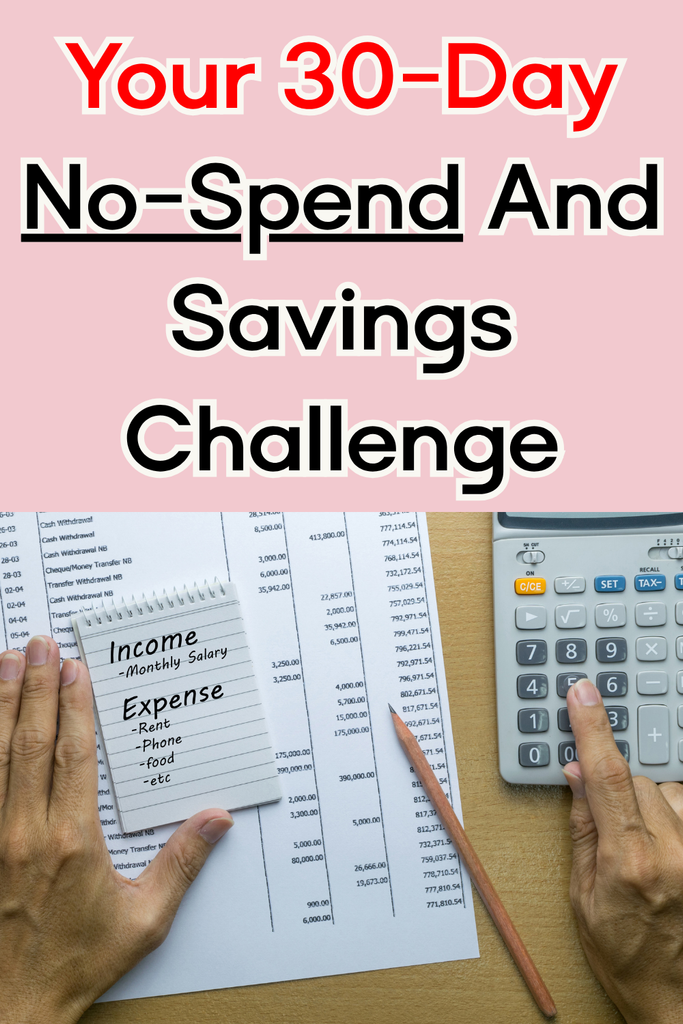
Week 4 Make it permanent.
A big well done to you for making it to the final week of the Money Reset Challenge!
You have come so far, and you should be proud of yourself.
It’s important that you stick to it and continue with the habits you’ve build throughout this challenge.
Remember, the challenge is not only for 30 days and saving money for that time; this challenge is about creating financial habits that will benefit you in the long term.
Day 22: Create a realistic monthly budget.
Create your realistic monthly budget. A budget will help you understand where your money is going and how much you can afford to spend.
Write down your monthly income, and then list your essential expenses. After that look at your non-essential spending and decide how much you can set aside for that.
Remember to set aside money for saving.
Day 23: Set a weekly allowance for non-essential spending.
We can’t completely avoid non-essential spending, but we should be very careful with it, as sometimes things can get out of control.
Set aside a budget that will cover your non-essential spending and stick to it. Even better, take the money out in cash, and when you have spend it, that’s it until the following week.
Day 24: Have another no-spend day.
Day 25: Review your debts.
List all your debts, the interest you have to pay and the minimum payment.
Focus on paying off the debt with the highest interest rate first, while still making the minimum payments on your other debts.
Whenever you have some spare money, consider putting it towards your debt, rather than spending it.
Day 26: Plan 5 cheap meals for next week.
Day 27: Check for forgotten membership.
Day 28: Donate three things you no longer need.
Look around your home and find three things you no longer use. They can be clothes, books, kitchen items, toys, anything that you no longer need or use and is in good condition.
Donate them to a charity shop or someone who could benefit from them.
Day 29: Calculate your total savings and spending reductions from the challenge.
Take your time to think about what you have managed to achieve so far.
Think about the coffees you made at home, the things you didn’t buy and the subscriptions you have cancelled.
Calculate how much you have saved, write down the total, and take a moment to appreciate your achievement.
Day 30: Celebrate and create your new money rules.
Today is the final day of the Money Reset Challenge, and you should be proud of yourself.
Take some time to celebrate your progress. Think about what you have learned and what you have discovered about your spending habits.
Remember, this is not the end of your journey- this is the beginning.
Think about what worked well and what didn’t. You may wish to change some rules, create your own money reset challenge and make it work for your lifestyle.
Final Thoughts
Let’s recap what you’ve learned throughout the 30-Day Money Reset Challenge:
In the last 30 days, you have challenged yourself to look at some of your spending habits, learned simple ways to make your money work harder for you, and taken a closer look at your spending.
Some of the key things to remember are:
Pay Yourself First
Saving should not be something you only do if there is money left. Saving should be a priority in your budget and should be one of the first things you do for yourself after covering your essential expenses.
Think Before You Spend
Implementing the 24-hour rule can help you avoid impulsive buying. Giving yourself time to think helps you decide whether you really need something.
Small Savings Add Up
Making your coffee at home, shopping at cheaper supermarkets and reducing small everyday expenses might seem insignificant, but these savings can add up over time.
Clear the Clutter
Selling or donating things you no longer need clears space in your house, helps you with your finances, and, most importantly gives someone else the chance to enjoy something you no longer use.
Know Where Your Money Goes
Creating a realistic budget will help you track your spending and will give you a clearer picture of your finances.
Take Control of Your Debt
Don’t let debt control you. Understanding what you owe and prioritising how you pay it back will help you create a clear plan to become debt-free person.
Set Spending Limits
You don’t have to stop living your life or stop spending money altogether. Creating a realistic budget and setting boundaries will help you stay in control of your spending.
You have also learned that enjoying life doesn’t have to cost money. Spending time with family and friends can be free.
The biggest lesson from this challenge is that you don’t need to make huge changes overnight.
Small, consistent changes can have a big impact over time.